


Saudi Arabia Provides Operational and Logistical Support to the Palestine Red Crescent Society
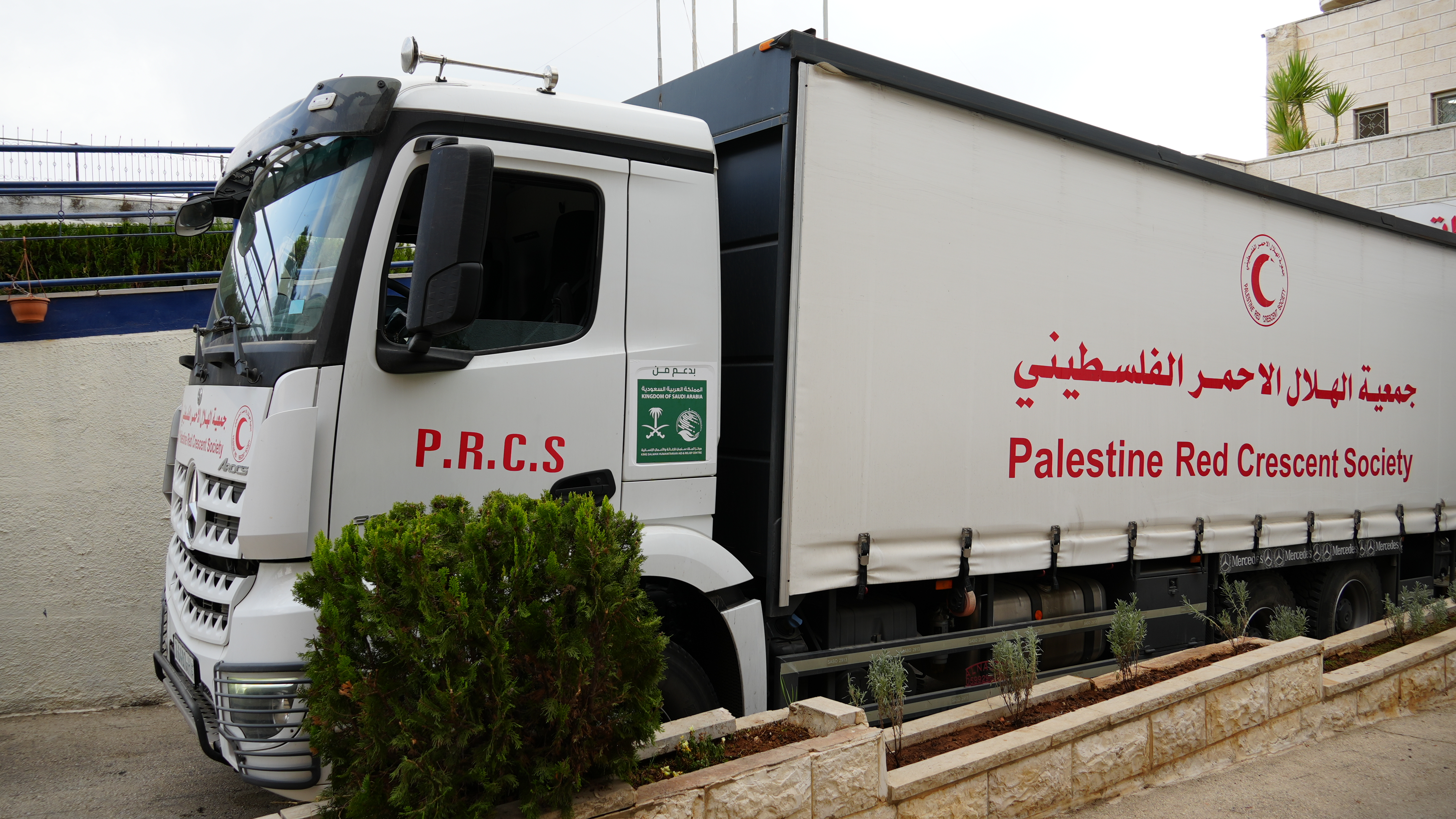
Humanitarian response goes beyond simply providing and delivering aid to those in need. It relies on a comprehensive system of operations, planning, and logistical capacities that enables the effective management of resources, storage and transportation of relief supplies, coordination of distribution, and delivery of assistance to its intended recipients. Amid growing humanitarian and operational challenges in Palestine, investing in this system is essential to sustaining humanitarian operations and ensuring their ability to respond to evolving needs.
For the Palestine Red Crescent Society (PRCS), which plays a vital role in providing humanitarian, healthcare, and relief services across Palestine, operational and logistical capacities are essential to supporting its staff and volunteers and strengthening their ability to carry out their duties under extraordinary circumstances. This is particularly critical in the Gaza Strip, where growing humanitarian needs demand sustained resources and robust organizational and logistical capacities to meet the evolving requirements of the response.
In this context, the Kingdom of Saudi Arabia, through the King Salman Humanitarian Aid and Relief Centre (KSrelief), is contributing to PRCS’s humanitarian and relief operations in the Gaza Strip and the West Bank. This contribution underscores the importance of humanitarian partnerships in supporting national institutions and strengthening their capacity to sustain their operations and fulfill their humanitarian mission.
Logistical Support: The Foundation of Sustained Humanitarian Response
Behind every relief operation lies a series of interconnected activities that require careful planning, coordination, and adequate resources. Receiving and managing humanitarian aid requires suitable storage facilities, while its transportation depends on the availability of vehicles, equipment, and fuel. Similarly, aid distribution relies on effective operational and logistical arrangements to ensure well-coordinated activities and the timely delivery of assistance to beneficiaries.
To this end, the contribution from KSrelief aims to address several essential operational and logistical needs of PRCS in the Gaza Strip. This includes renting warehouse facilities, providing logistical equipment, contributing to the costs of securing two four-wheel-drive vehicles, and supplying the fuel needed to operate relief and logistical support vehicles, as well as covering volunteers’ daily subsistence expenses.
The contribution also covers the costs associated with distributing in-kind assistance provided by KSrelief, thereby strengthening coordination across the various stages of relief operations, from storage and management to transportation and final distribution. This integrated approach is particularly important in contexts where humanitarian organizations face growing operational and logistical challenges, as the effectiveness of humanitarian assistance depends on the availability of adequate resources and capacities to manage and deliver aid efficiently.
Investing in Capacity to Sustain Humanitarian Operations
A sustainable humanitarian response requires more than the direct provision of assistance; it also depends on strengthening the capacities that enable humanitarian organizations to manage their operations and maintain the continuity of their services. This includes providing essential operational supplies, enhancing logistical capacities, and supporting staff and volunteers, who form an integral part of the humanitarian response system.
In this context, contributions dedicated to operational needs hold significance beyond their financial value, as they provide essential support for the day-to-day operations that underpin humanitarian response efforts. The availability of fuel, vehicles, equipment, and storage facilities, alongside support for volunteers, helps create the conditions necessary to coordinate and sustain relief operations in line with identified needs and available resources.
Humanitarian Partnerships and Support for National Institutions
Humanitarian partnerships play a vital role in supporting crisis response efforts by providing the resources and capacities that frontline organizations need to sustain their operations and services. These partnerships are particularly valuable when they focus on strengthening local and national capacities and enhancing the preparedness of humanitarian organizations to respond effectively to evolving humanitarian needs.
In this context, the contribution from KSrelief supports PRCS’s efforts in the Gaza Strip by strengthening the operational capacities essential to carrying out its humanitarian and relief interventions. It also highlights the importance of integrating the direct provision of humanitarian assistance with support for the systems responsible for its management, transportation, and distribution.
PRCS remains steadfast in fulfilling its humanitarian, healthcare, and relief mission across Palestine, drawing on the dedication of its staff and volunteers and its unwavering commitment to the Fundamental Principles of the International Red Cross and Red Crescent Movement, particularly humanity and impartiality, while upholding human dignity and alleviating suffering.
Strengthening the capacities of humanitarian organizations goes hand in hand with enhancing their ability to reach people in need and respond effectively to their needs. Every warehouse that facilitates aid management, every vehicle that enables its transportation, and every resource that helps sustain the work of staff and volunteers forms part of a broader humanitarian response system, ultimately aimed at ensuring that assistance reaches those in need when they need it most.
In this regard, the Palestine Red Crescent Society expresses its appreciation for the contribution of the King Salman Humanitarian Aid and Relief Centre and underscores the importance of sustaining humanitarian partnerships that support relief operations and strengthen the capacities essential to their continuity. Such partnerships contribute to serving the Palestinian people, advancing efforts to address humanitarian needs, and safeguarding the dignity of those affected.

 HQ Location: